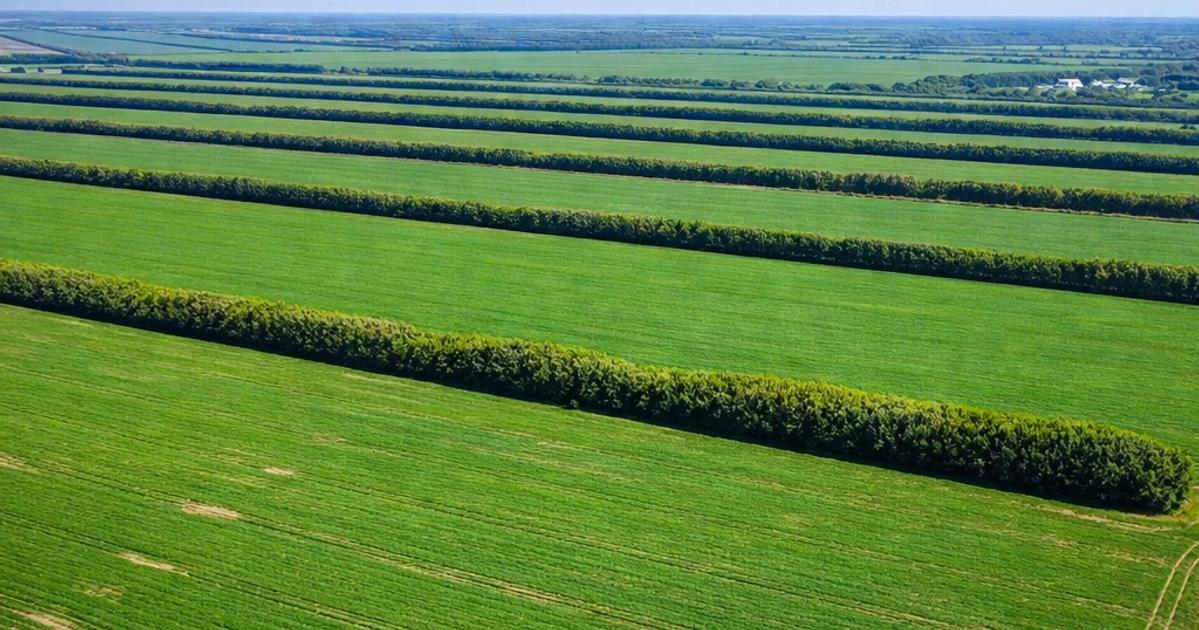

Historically, Bolivian farmers have often viewed forest conservation with skepticism, believing that forested land represents lost opportunities for lucrative cash crops. However, innovative agroforestry systems, particularly the strategic use of windbreaks, are challenging this perception and fostering a new appreciation for the economic and ecological value of trees.
Since 2005, Ketrawe Foundation has been at the forefront of promoting and implementing these agroforestry practices. They have worked closely with farmers, introducing them to the concept of integrating trees like Syzygium cuminii(Naturalized species), Tabebuia impetiginosa, and Prosopis chilensis among other native species into their farming systems. Syzygium cuminii offers resilience against glyphosate drift, while Prosopis chilensis and other native species provide fodder and enrich the soil with nitrogen, reducing the need for chemical fertilizers.
Beyond these benefits, windbreaks act as "biodiversity highways," increasing habitat connectivity and fostering ecological restoration within intensively farmed landscapes. But perhaps most importantly, they have proven to be economically advantageous for farmers. Ketrawe Foundation's extensive research, spanning over 15 years, has demonstrated that windbreaks can boost agricultural yields by over 15%. This increase in productivity translates to higher profits and less pressure to clear forests for additional farmland.
Armed with this compelling data and years of practical experience, Ketrawe Foundation has witnessed the rapid adoption of windbreak systems throughout the Bolivian Amazon basin. Farmers are recognizing that preserving and strategically incorporating trees can enhance, rather than hinder, agricultural productivity. This shift in perspective represents a crucial step towards sustainable agriculture and biodiversity conservation in Bolivia.
The success of Ketrawe Foundation's work with windbreaks in Bolivia highlights the potential of agroforestry to bridge the gap between agricultural production and environmental stewardship. By embracing innovative approaches like these, we are demonstrating a commitment to a future where farming and forests coexist harmoniously.